Leila K. Blackbird (née Garcés) is a proud New Orleanian of mixed settler, Louisiana Creole, and Indigenous descent. She received her Ph.D. from the University of Chicago where she also earned an A.M. in U.S. & Atlantic History and a Graduate Certificate in Human Rights Theory & Practice. Blackbird is a sociolegal scholar, critical digital humanist, and postcolonial theorist, and her research focuses on slavery, genocide, and state violence. Her dissertation, entitled “Embodied Violence: Settler Colonialism and Slavery on America’s Third Coast,” is a study of the relationship between divergent colonialisms and the enslavement of Indigenous and Afro-Indigenous peoples in the Gulf South across French, Spanish, and Anglo-American regimes.
Currently, Blackbird is the Presidential Postdoctoral Fellow of History at Brown University and an affiliate of the John Carter Brown Library and the Ruth J. Simmons Center for the Study of Slavery and Justice, teaching courses on ecological and embodied violence. She formerly served as Ethics Lead and Senior Research Editor for Keywords for Black Louisiana (K4BL)—a National Historical Publications and Records Commission (NHPRC)-funded project at Johns Hopkins University—overseeing core research and language team operations and has previously been affiliated with the Midlo Center for New Orleans Studies, the New Orleans Center for the Gulf South, and the Newberry Consortium in American Indian and Indigenous Studies (NCAIS). At UChicago, Blackbird taught courses on militant democracy and authoritarianism, Indigeneity and diaspora, and critical race studies.
Additionally, Dr. Blackbird holds a B.A. in African American History and an M.A. in Global/Atlantic History from the University of New Orleans. Her work has been featured in books such as Louisiana Creole Peoplehood and What is History, Now? and in the journals Eighteenth-Century Studies, Scholarly Editing, and The William & Mary Quarterly. Her article, “‘It Has Always Been Customary to Make Slaves of Savages’: The Problem of Indian Slavery in Spanish Louisiana Revisited, 1769-1803,” recently won the Omohundro Institute’s WMQ New Voices Award. A forthcoming piece is expected in A Cambridge History of the American Revolution.
Scholarship does not emerge out of nothingness; it comes from our lived experiences, the personal histories that we inherit, and the perspectives we form because of them. In fields shaped by fragmented archives, colonial record-keeping, and silences wrought by epistemic and ontological violences, understanding your positionality is not optional, it is a methodological necessity. For example, in Black Studies, scholars are expected to interrogate how their own intersecting identities—such as race, class, gender, and sexuality—shape their understanding of and relationship to systems of oppression and resulting power dynamics. In Native American and Indigenous Studies (NAIS), there is a further obligation to articulate oneself in relation to Indigenous communities, lands, and sovereignties, as well as to the responsibilities that emerge from those relations. This sort of transparency is not merely academic practice, it is part of the ethical framework that governs how we should engage with Black and Indigenous knowledges, stories, and communities.
I come to this work as a first-gen, working class, queer, non-binary, female-bodied, disabled person; as a New Orleanian and Katrina survivor; as a parent of a multi-racial trans child; as a partner in a same-sex interfaith marriage to the eldest daughter of an immigrant; as a white-presenting Creole who is a member of a descendant community; as a mixed-race Indigenous person whose life and personal history is shaped by displacement, erasure, and the ruptures caused by familial loss, foster care, and adoption. My own lineage reflects the violences that I write about, including the severing of kinship bonds, the reshaping of family ties, and the racialized structures of dispossession and disenfranchisement that have marked generations of detribalized and diasporic Afro/Indigenous families in the Gulf South.
My past is not opaque, it’s complicated and painful. Because of it, I approach my work carefully and fully aware of the responsibilities that come with finding oneself and reconnecting with community as a young adult after a childhood shaped by identity loss and cultural genocide. These foundational experiences and core wounds have made ethical relationality, informed consent, and interpersonal boundaries central to how I work and who I trust. I do not claim what is not mine. Instead, I orient myself toward anti-racism, Indigenous sovereignty, family-building, healthy community relationships, and the duties that emerge from being in right relation with the peoples whose histories intersect with my work.
I also recognize that my positionality has shifted immensely during my journey through graduate school, which means that my actions and subsequent responsibilities to community now hold greater consequence. I take this seriously. Being a scholar does not grant me or any other academic authority over others’ stories; should never equal automatic trust or access; and cannot be fully divorced from institutional legacies of harm. Instead, I am obligated to use my place at the table as an advocate and to approach my work with relational care. I strive to make my work a site of repair and solidarity, for myself and for others. As a person who has experienced intergenerational trauma, I understand how colonial legacies shape both intimate lives and public histories. I am motivated by a commitment to ensuring that future generations encounter scholarship that speaks to liberation, recognizes the complexities of kinship and belonging, and celebrates the diverse ways in which our peoples have survived and continue to persist today.
I identify as a multi-ethnic, mixed-race descendant of European settlers (French, Spanish, and Anglo/Irish), Afro-Creoles, and Indigenous peoples whose histories were shaped by the historical processes that I study, including displacement, enslavement, and colonial disruption. My life story reflects the ongoing nature of settler colonial processes, including the fragmentation of kinship ties, the aftermath of interpersonal abuse, and the devastating impacts of foster care and adoption. My identity has long been a site of violent contestation; during my early childhood, my name was changed multiple times, and I have lost multiple families and family members due to these systemic processes. I deserve opportunities for continued healing and repair. But in doing so, I must remain grounded in lived experience, community relationships, and care. This is the reparative work that I began decades ago and that I continue to do today. I try to address this more fully, with citations, in the introduction of my dissertation.
2. “What does accountability in NAIS mean to you?”
In Native American and Indigenous Studies (NAIS), accountability refers to a set of ethical, relational, and methodological obligations that guide how scholars engage with Indigenous peoples, lands, knowledge systems, and histories. It is grounded in respect for sovereignty, community protocols, and long-standing practices of relational responsibility that are in place to mitigate harm. For me, above and beyond this, accountability also means showing up and doing so with humility, transparency, and care. It is my responsibility to listen to and to elevate the voices of those whose communities and homelands shape the histories that I study. It is my duty to protect sacred stories that have been shared with me and safeguard any closed practices that I may have been gifted access to, to seek guidance from elders and community leaders, and to refuse unethical personal gain or profit. For example, I do not accept scholarships, appointments, grants, fellowships, speaking engagements, or publishing requests that are meant for enrolled members or citizens of federally recognized tribes. In fact, it has always been my practice to A) disclose my positionality to committees, employers, agents, and others; B) decline offers that would be inappropriate ethically; and C) redirect those opportunities to other colleagues and community members.
3. “If you’re Indigenous, are you enrolled in a federally recognized tribe?”
No. I am not an enrolled member or citizen of a federally recognized tribe, and I am always transparent about this. Though I have had blood-kin and kin-by-marriage who have been enrolled, I have no pathway to federal enrollment due to the realities of foster care and adoption. For decades, Louisiana was a closed adoption state, and it did not grant adoptees the right to access their birth or adoption records until 2022. Prior to this, it was state policy to replace birth certificates with court-issued documents listing the adoptive parents’ names and then to seal records. However, the Catholic Church—which operated the foster placement service I was in—did not retain my birth certificate or any records related to my placements. Because of this, I have no birth certificate in my original name. Therefore, I am not legally related to my biological family and cannot be enrolled. And because I cannot be enrolled, I do not claim any rights, benefits, political affiliations, or cultural authority that may be reserved for tribal citizens, nor do I speak on behalf of any tribal body or organization. My intellectual contributions and theoretical claims are my own, and my commitments are rooted in ethical relationality and respect for Indigenous sovereignty. In other words, I am accountable to and actively maintain relations with the descendant communities and tribal nations my work engages, and I defer to the community leaders, elders, and culture-bearers to whom I am accountable.
4. “But aren’t you a Cherokee?”
No. I am not an enrolled member or citizen of the Cherokee Nation of Oklahoma, the United Keetoowah Band (UKB), or the Eastern Band of Cherokee Indians (EBCI), nor have I ever claimed to be. I have had blood-kin and kin-by-marriage who have been enrolled, but to my knowledge I am not a linear direct descendant of an individual on the Dawes Roll, nor do I possess the tribally specific “blood quantum” necessitated by the UKB or EBCI. Moreover, I would not meet the burden of documentary proof required for enrollment due to my status as an adoptee [see above]. Therefore, in the past, I have correctly identified myself as an “unenrolled adoptee” and a descendant, in accordance with language originating from Native-led activist spaces. I have done so because it is my responsibility to be open about my connections, or the lack thereof. Likewise, in 2020, a diverse collective of Cherokee scholars, writers, and educators released a joint-statement demanding that any and all mentions of “Cherokee identity” be thoroughly transparent and subject to question. This is because, for many years, Cherokee people have had to endure countless instances of misappropriation and misrepresentation, including by institutions and individuals who have caused real material harm. So, let me be clear: I do not speak for Cherokee people. Rather, I stand with the collective and affirm that being Cherokee is a political identity, not an ethnicity established through self-identification. Falsely claiming enrollment or political affiliation is a violation of both tribal sovereignty and professional ethics.
5. “Okay great, but do you have proof?”
Yes. I have verifiable family ties, and I have made specific details—like family sirnames, copies of primary sources, and enrollment information—publicly available here. I am willing to discuss my unique situation and commitments with other enrolled scholars or representatives of legitimate tribal organizations who contact me confidentially, respecting the privacy of my living relations due to the complexities involved with forced child removal. You may also view letters of support here from community members, and a certified genealogical report here that pertains to some of my ancestors.
6. “So you are in community?”
Yes. I have been an active part of my home community for many years, and I maintain relations with both Afro-descendant organizations and Louisiana descendant culture bearers and with members of various tribal communities who recognize me and claim me as kin, such as the Tunica-Biloxi Tribe, the Pointe-au-Chien Indian Tribe, the United Houma Nation, the Bayou Lafourche Band of Biloxi-Chitimacha, and the Karankawa Tribe of Texas. I have family, including immediate family members and cousins from different lines, who are enrolled in the Choctaw-Apache Tribe of Ebarb, the Natchitoches Tribe of Louisiana, and the Atakapa-Ishak Nation of Southwest Louisiana and Eastern Texas. Multiple councilpeople and chiefs are aware of me and my work, and they have been consulted in the past. They are cited in my work accordingly.
7. “Why are there so many people and tribes in Louisiana that are not recognized?”
Louisiana’s recognition landscape reflects the deep histories of colonization in the Gulf South: forced migrations, racial reclassification under French and Spanish rule, anti-Black and anti-Indigenous laws under Anglo-American rule, Jim Crow-era practices that erased Indigenous identities in the census and public records, and pressure from big industry and corporations who operate on Indigenous and Freedmen lands. Similar to Mashpee and Lumbee histories of dispossession, many Louisiana tribes have maintained continuous communities and political structures for generations but have been denied federal status due to archival erasure, unacknowledged treaties, discriminatory standards of Indigeneity that are anti-Black, and the inconsistent application of recognition criteria rooted in settler expectations rather than Indigenous realities. Crucially, the politics of recognition in Louisiana are incredibly complex, but they reflect the limitations of federal processes, not the authenticity and continuity of Indigenous peoples or nations themselves.
8. “If you are a Louisiana Creole, does this mean you identify as Black?”
No. Louisiana Creole peoplehood is defined by Louisiana Creole people, but the consensus is that it is an ethnicity, not a race, that should be viewed through the lens of multiraciality. Likewise, Blackness is defined by Black people, and being Creole does not mean the same thing as having an exclusively African American identity. Differences between communities in Louisiana and in the diaspora are culturally and historically specific. Similarly, not all Creoles share the exact same ancestry, but we do all have some combination of African, Indigenous, and pre-Anglo-American European intermixture. Creoles come in many skin-tones and phenotypes due to the multigenerational historical, political, and institutional systems that created Creole communities and the legal notions of race that once defined civil rights and circumscribed sociopolitical belonging. Despite the fact that the “one-drop rule” in Louisiana was appealed after my birth, I do not walk in this world as a Black woman or in the same way as my Black-presenting Afro-Indigenous relatives. This includes members of my immediate family; through our differing lived experiences, I have learned to use my proximity to whiteness to speak out and speak up, step back and listen, and do the continuous and committed work of anti-racism, which includes recognizing the unique identities and lived experiences of Black-Native people and challenging anti-Blackness in Native spaces.
9. “What brings you to this work?”
My past brings me to this work and shapes how I approach questions of power, belonging, and erasure. I do this work out of a love for my people and a deep commitment to anti-colonial and anti-racist scholarship. My research seeks not only to produce new historical insights that may help dismantle systems of oppression but also to challenge academic practices that are extractive and exploitative. I am motivated by the conviction that scholarship should serve communities, help correct historic injustices, and contribute to a more accurate and nuanced understanding of the past in order to build more equitable futures. I work with the hope that future generations will have access to factual literature and public history that gives them hope by reflecting their own lived experiences and family stories with dignity, honesty, and care.
10. “Why did you include a positionality statement and FAQ on your site?”
Because in fields shaped by violence, transparency about one’s standpoint is necessary for ethical research. Because recognizing your positionality is not a form of apologetics or somehow unacademic; rather, it is a practice in accountability and relationality that is a refusal to treat peoples and their histories as objects or possessions. Because it is hard for me to talk about my past, but I recognize that good activism and teaching comes from sitting in your discomfort and letting it challenge you to grow. And because my commitments align with the ethical foundations of Black Studies and NAIS, which reflect the responsibilities I hold as a researcher, professor, and community member.
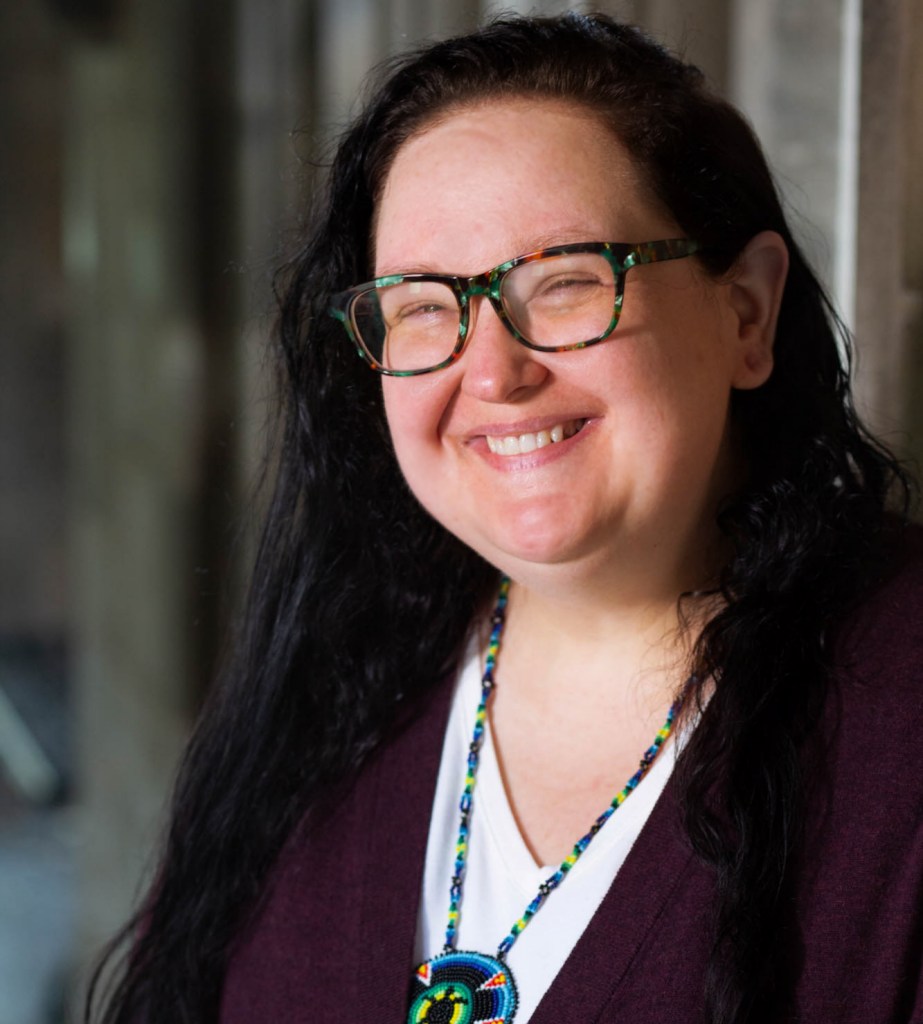
 Leila K. Blackbird